




Comparative Analysis Of Automation And Automation Semi-Automatic Paper Cup Machines: Production Efficiency, Cost Structure And Application Scenarios
Apr 15, 2026
Leave a message
In the paper cup manufacturing industry, automatic paper cup machine and semi-automatic paper cup machine are two dominant equipment categories. The difference between them has a profound impact on the production strategy and market competitiveness of enterprises. This paper makes a detailed comparative analysis from three dimensions ofproduction efficiency, cost structure and application scenarios to provide decision making insight for industry practitioners.
1.Production Efficiency: the twin powers of speed and stability
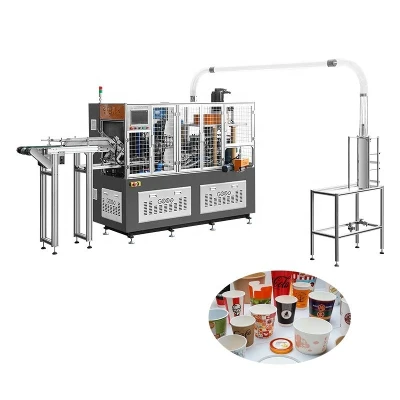
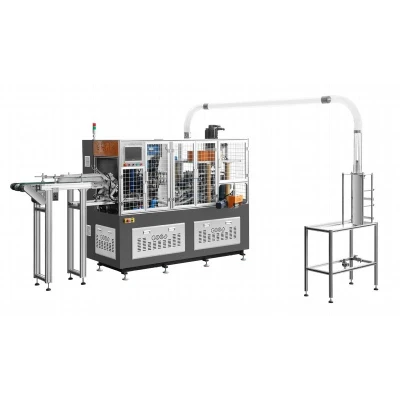
Fully automatic paper cup machine specializes in high-speed continuous production, through synchronous operation of multiple workstations, production of 180 to210 cups per minute. For example, Rian's Mingyuan Machinery the MYC-180S all-servo model incorporates 13 servo motors for seamless production of 6-22oz cups and quick mold changeovers (under 180 minutes). Its intelligent control system monitors production data in real time, using artificial intelligence algorithms to maintain an initial pass rate of 99.9 percent, while processing 8 mainstream cup sizes, including Milk tea specific cup and takeaway specific cup.
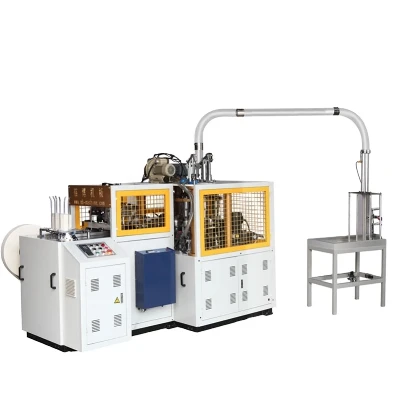
Semi-automatic machines are limited by manual intervention and typically operate at 50-80 cups per minute. Entry-level models require operators to manually deliver paper and sticker seats, work eight-hour shifts and export between 24,000 and38,000 cups a day. While some manufacturers have optimized mechanical structures to 100 cups permin, stability still depends on the operator, with waste rates 3 to5 percent higher than in fully automated systems.
2.Cost Structure: balancing initial investment with long-term return
Initial capital expenditure for fully automated machines is $42,000
110,000, according to servo motor count, mold precision, intelligence and other characteristics. The MYC-180S's high-precision molds account for 35% of total cost, but support quick switching between 8 cup sizes, making single-machine multi-product manufacturing possible.
Semi-automatic models 7000 −
21,000, with cost advantages of simplified mechanics and downgrade controls. For example, homegrown semi-automatic devices using asynchronous motors and omitting PLC systems can reduce procurement costs by 20%, but require 2-3 operators and lack traceability of production data.
Long-term operating cost starker differences. Fully automated systems can achieve energy savings of ≤0.25 kW / h per 100 cups through servo motor precision control, more than 40% compared to semi-automatic models. Full-gear transmission and automatic lubrication systems extend the service life of key components to more than five years, reducing maintenance costs by 60% annually. By contrast, semi-autonomous machinery accelerates wear and tear due to frequent starts/stops, with the cost of replacing belts and gears costing £2,800 a year.
4,200.
3.Application Scenarios: Dynamic Matching of Size and Flexibility
Fully automated machinery dominates large-scale industrial production. Global coffee chain has deployed Mingyuan's high-speed units to reach 100,000 cups aday, integrated with automated packaging and counting systems, and reduced labor costs by 65%. Cloud-based management enabled coordination of 67 global production sites, while predictive maintenance maintained 92 per cent Overall Equipment Effectiveness. During the holiday season, three additional leases were added to expand capacity within 72 hours, ensuring supply chain resilience.
Semi-automatic models thrive in small batches and customization. Start-ups and regional foodservice brands use these technologies to produce branded cups with as little as 5,000 units of MOQ. One entrepreneur has adopted a a "factory in store" model, using the machine's 8 square metres of compact floor space to service schools and convenience stores, recouping investment within 8 months by localising production.
4. Technological evolution: intelligence and sustainability as drivers
Automated machines now integrate AI vision inspection and IoT remote diagnosis. Mingyuan's latest model uses 5G connectivity for real-time production analysis, with predictive maintenance boosting OEE to more than 92 percent. To comply with EU's Single-Use Plastics Directive, major manufacturers have developed hydrogen fuel cells prototypes to achieve zero-carbon production.
Semi-automatic innovations focuses on simplicity of operation and cost optimization. New car uses touchscreen parameter control, which reduces the training time for operators to 2 hours. Modular designs allows incremental upgrades to servo motors to extend equipment lifecycles.
Conclusion:
The choice of automatic cup machine and semi-automatic paper cup machine reflects the enterprise strategy. For businesses requiring more than50,000 cups aday, fully automated systems offer unparalleled efficiency and cost optimization. On the contrary, semi-autonomous models provide flexibility and lower barriers to entry for start-ups or regional actors. With the deep integration of material science converges and intelligent manufacturing, future production line will develop to full-servo + digital ``two-element "architecture, which requires equipment manufacturers to balance technological innovation with customer needs and maintain competitive advantage.
Send Inquiry