




Paper Cups Are Widely Used in Our Daily Lives, But Few People Truly Understand How They Are Manufactured
Jul 01, 2026
Leave a message
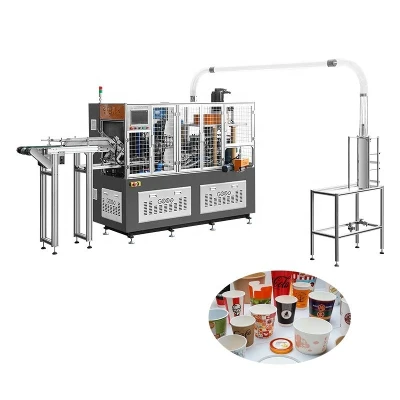
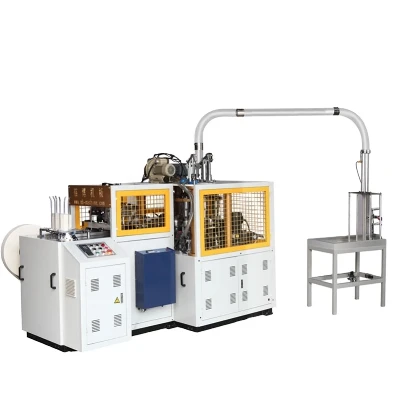
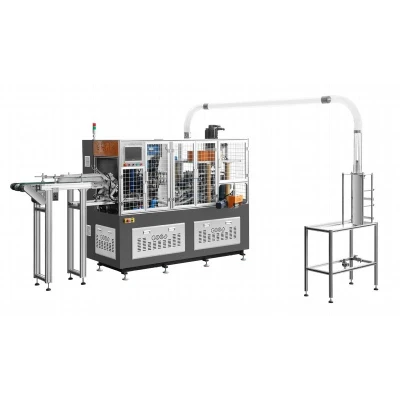
Paper cups are widely used in our daily lives, but few people truly understand how they are manufactured. A deceptively simple disposable paper cup actually relies on a highly automated industrial device,the paper cup molding machine. Through a series of precise mechanical operation, the raw paper materials will be converted into water-retaining, heat-resistant, leak-proof paper cups. Here's a closer look at how paper cups are made.
paper cups are made from raw materials. Food-grade coated paper is a commonly used coating paper with a thin sheet of polyethylene on one or both sides. The PE coating plays a crucial role in making paper cups waterproof and oil-resistant, as well as preventing them from softening or leaking in contact with hot beverages. After cutting, the paper is sent to a paper cup molding machine for processing.
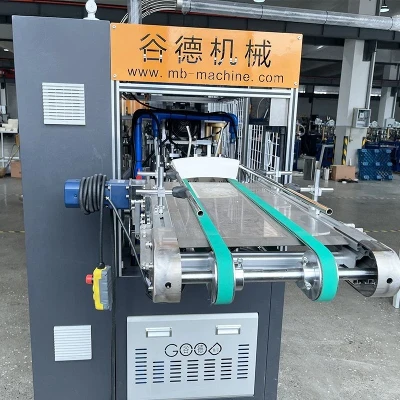
The first step of a paper cup molding machine is automatic paper feeding. This machine can send roll paper or tissue paper to the processing workshop accurately through the paper feed feeding system. During this process, the mechanical system must ensure that each piece of paper is in the correct position, otherwise errors may occur in subsequent molding and sealing phases.
The second stage is cup forming. The machine rolls the cut paper into cylindrical shapes and adheres the side seam with thermal or ultrasonic welding techniques. This step is crucial for the structural stability of the paper cup. If the bond is not strong enough, the cup may crack or leak during use.
After the cup is formed, the machine enters the sealing process at the bottom. The substrate automatically feeds the paper and is aligned precisely with the cup body. The seal is then sealed using high temperature, high pressure or ultrasonic bonding. The strength of the bottom seal directly determines whether the cup will leak, so this step requires a high degree of precision.
Then the molding and finishing stages. At this point, the cup has its basic form, but it still needs to be curled and molded around the edges for smooth, firm and comfortable use. The machine adopts die curling edge to improve appearance and structural strength.
Temperature and pressure control is extremely important throughout the production process. Modern paper cup molding machines are generally equipped with intelligent control systems that can adjust heating temperature and pressure in real time according to different materials and cup specifications. This automation has greatly improved productivity and product consistency.
The final step is checking and counting. Modern machines are often equipped with automated detection systems to identify defective products such as damaged, leaking or deformed cups and remove them automatically. Qualified cups are counted, stacked and then sent to be packed, ready for transport and sale.
In general, the paper cup molding machine works like a ``paper cup production line "with high accuracy. It converts flattened paper into finished cups by feeding, molding, bonding, bottom sealing and molding. The entire process is highly automated, resulting in significant efficiency gains while ensuring hygiene and consistency.
With the development of intelligent manufacturing, modern paper cup molding machine is constantly developing. Many systems now include servo control systems, vision inspection systems and remote monitoring functions, making production smarter and more energy-efficient. In the future, paper cup manufacturing will be more efficient, environmentally friendly and in line with sustainable development goals.
By understanding the workings of paper cup molding machines, we can see that something as simple as a paper cup actually involves the integration of mechanical engineering, materials science and automation technology. Everyday objects everyday life often hide extraordinary industrial intelligence behind simplicity.
Send Inquiry