




From Paper Cups To Mugs: A Complete Guide To How To Make Them
Jul 15, 2026
Leave a message
Paper cups have become an important part of the restaurant, coffee, beverage and takeout industries. While millions of disposable paper cups are used every day, few people know how a piece of paper ends up in a finished product. In fact, every paper cup has to go through a number of manufacturing stages such as material preparation, automatic forming, quality inspection and packaging. Most of these processes are completed by fully automated paper cup molding machines.
This paper introduces the whole production process of paper cup and how paper cup molding machine can shape paper cup into a high quality finished product.
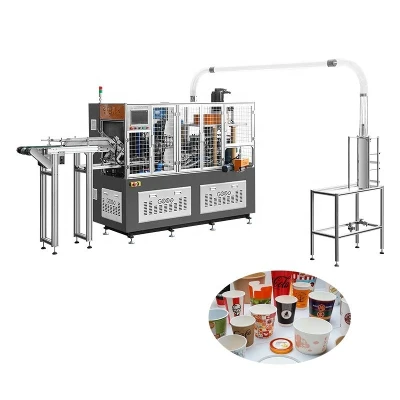
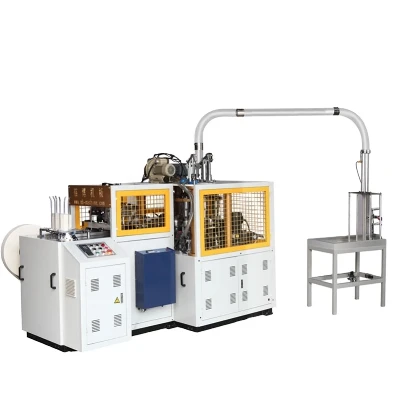
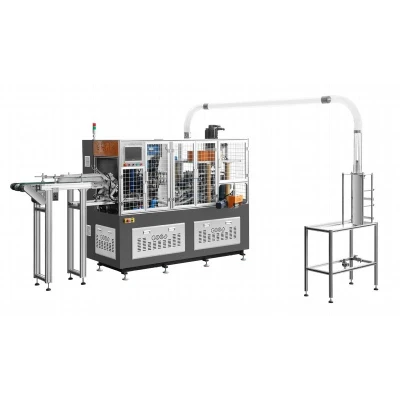
Cup Maker is an automated production system that converts pre-printed food-grade paper into disposable paper cups. Modern machinery automatically completes the entire production process, including paper feeding, side sealing, bottom insertion, bottom sealing, heating, rolling, curling, inspection, finished product collection, etc.
paper cup molding machine can produce paper cups of all sizes, including 4 ounces, 8 ounces, 12 ounces and 16 ounces, depending on production requirements. It also produces single-walled paper cups, double-walled paper cups and corrugated cups.
Step 1: Prepare paper.
The manufacturing process starts with raw materials.
Paper cups are usually made from food-grade polyester paper or environmentally friendly polyester acid-coated paper. Paper must meet food exposure safety standards while providing sufficient hardness, moisture resistance and heat resistance.
Paper usually goes through the following preparation processes before entering the production line:
Printing customer logos and design
body blanks
Die Cutting Cup
Classification and packaging of means of production;
The prepared material is then loaded into a paper cup molding machine for automatic processing.
Step 2: Automate serving.
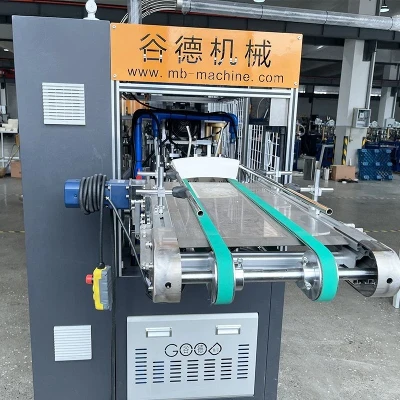
After starting, the pre-cut cup body blank is automatically fed into the forming system.
According to the operating cycle of the machine, each billet is sent to the molding station precisely through the paper feeding mechanism. Modern high-speed paper cup machine adopts servo control systems to ensure accurate positioning, stable feed and high production efficiency.
Accurate feeding is essential as it directly affects the quality of the following sealing process.
Step 3: Cup Body Forming
Flat billets are rolled into conical cylinders in molding station.
side seam are then heated to melt polyethylene or polyethylene PLA, allowing the overlapping edges to stick together firmly under pressure. This thermal sealing process creates a leakproof cup body.
Seal quality is one of the important factors affecting the performance of the finished paper cup.
In order to ensure the consistency of sealing quality, high-speed machine tools are precisely controlled:
Heating temperature
Heating time
Sealing pressure
Forming angle
Proper adjustment of these parameters helps to produce strong and reliable paper cups.
Step 4: Automate bottom delivery.
Once the cups is formed, the machine began to feed the paper discs.
The automatic feeding system inserts each chassis into the cup body and locates it accurately.
Modern paper cup molding machine usually adopts the method of vacuum suction and mechanical positioning to ensure the exact position while minimizing material jams and feeding error.
Steady profits help speed up production and reduce waste.
Step 5: Bottom Sealing
After the bottom disc is inserted, the machine performs the bottom sealing process.
The heating system softens the coated paper and the pressure rollers fastens the chassis to the cup.
Most machines also use the scrolling process to enhance connectivity.
Rolling mode increases friction between the bottom and the wall of the cup, creating a sturdy seal that can hold both hot and cold beverages.
Step 6: Bottom Compression and Cup Shaping
After sealing at the bottom, the cup passes through additional molding and compression stations.
The roller further compresses the bottom area, ensuring that the paper layers stick together and create uniform knurling patterns.
This process improves sealing performance, enhances structural strength, and helps maintain its shape during filling, transportation, and use.
Step 7: Rim Curling
Curling is one of the final forming operations.
The machine uses a high-speed curling mechanism to roll out of the upper rim of the cup, creating a smooth, rounded rim.
Reasonable curls have the following benefits:
Increase cup strength.
A more comfortable drinking experience
Avoid paper with sharp edges
Improving product appearance
Makes lid stick more easily.
The quality of the edge of the cup is an important indicator of the overall quality of the cup.
Step 8: Automatic Quality Inspection
Modern high-speed paper cup molding machine is usually equipped with automatic inspection systems.
These systems can detect:
Bad seal
Improper bottom installation;
Incomplete rim curling
Cup deformation
Missing paper components
Other substandard products
Some advanced machines also use vision inspection systems to monitor the size and appearance of cups in real time to ensure consistency throughout production process.
Step 9: Collection and packaging of finished cups
Upon inspection, qualified paper cups are automatically transferred to the collection system.
The machine stacks cups in predetermined quantities, allowing them to be packed manually or automatically.
Finished paper cups are stored in packaging and then shipped to coffee shops, restaurants, food service companies, supermarkets and beverage manufacturers.
The entire production process requires little manual intervention. Operators are mainly responsible for monitoring the operation of the machine, replacing materials and carrying out daily maintenance.
Advantages High-Speed Paper Cup Forming Machines
With continuous progress of automation technology, high-speed paper cup molding machine has become the first choice of paper cup manufacturers.
Modern machines have several distinct advantages over conventional devices.
First, they provide greater productivity. Many high-speed models can produce 100 to 180 paper cups or more per minute, making them suitable for mass production.
Second, they provide better product consistency. The automatic control system maintains stable feeding, heating and molding conditions throughout production process.
Third, reduce material waste. Precise positioning and automatic inspection systems can quickly identify defects and reduce rejection rate.
Finally, their high degree of automation lowers the demands on the workforce. Most production steps are completed continuously on a single machine, reducing operating costs while increasing productivity.
Why regular maintenance is important
Even the most advanced paper cup molding machines require regular maintenance to ensure stable performance.
Daily maintenance generally includes:
Clean heating components
Lubricating moving parts
Check bearings
(a) Adjustment of feed structure;
Clean forming molds
Inspection of pneumatic systems
Replacement of worn-out components
Proper maintenance not only extends the service life of the machine, but also helps maintain the consistency of production efficiency and product quality.
Conclusion:
Converting a food-grade sheet of flat paper into a leak-free disposable paper cup involves several precisely controlled manufacturing steps, including feeding, shaping, side sealing, bottom insertion, bottom sealing, rolling, curling, testing and packaging. The paper cup molding machine integrates all these operations into a continuous and efficient production process.
With the development of the food packaging industry, paper cup molding machines have become faster, smarter, more energy efficient and automated. Future development will focus on increasing capacity, improving quality control, reducing energy consumption and smart manufacturing technologies to help paper cup manufacturers achieve greater productivity, reliability and sustainability.
Send Inquiry