




What Categories Can Paper Cup Machines Be Divided Into?
Apr 15, 2025
Leave a message
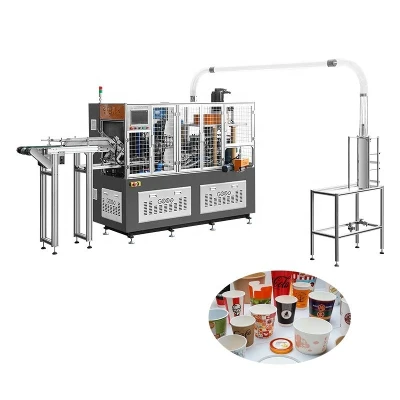
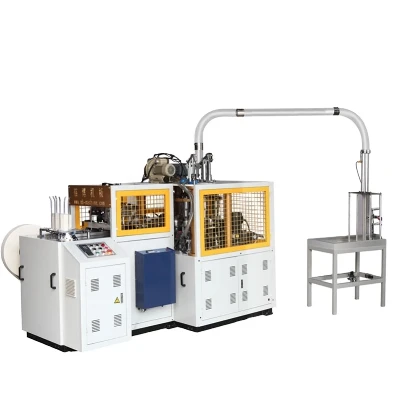
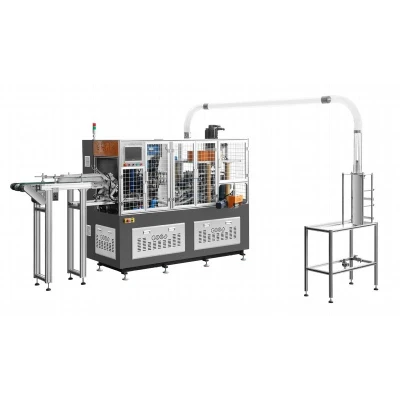
The classification of paper cup machines needs to be combined with four dimensions: production principle, functional positioning, degree of automation, and industry adaptability. The following is a systematic review of its classification system and core differences based on technical logic and market demand:
1. Classification by production principle: Determine the core technology of paper cup forming.
Type core technology. Applicable scenarios Advantages and disadvantages analysis
Roll paper cup machine Paper roll unwinding → printing → laminating → forming → bottom cover → cup collection Large-scale standardized production (daily output of 500,000+) Advantages: high efficiency, low cost (raw material utilization rate ≥ 92%)
Disadvantages: time-consuming plate change (2-3 hours/time), poor flexibility
Sheet paper cup machine Prefabricated paper → blister forming → side seam welding → bottom cover Small batch customization (daily output of 50,000-100,000) Advantages: fast mold change (within 15 minutes), support for special-shaped cups
Disadvantages: high raw material waste rate (about 15%)
2. Classification by degree of automation: directly affecting manpower and efficiency
Type automation characteristics. Production capacity range Manpower requirements
Semi-automatic paper cup machine Manual paper feeding → mechanical forming → manual cup collection 30-60 pieces/minute 2-3 people/shift required (paper feeding, quality inspection, packaging)
Fully automatic paper cup machine Full process automation (paper feeding → forming → inspection → packaging) 120-200 pieces/minute Only 1 person is required to monitor (abnormal shutdown processing).
Smart paper cup machine Integrated AI visual inspection + MES system + adaptive control 180-300 pieces/minute 0 people on duty (remote operation and maintenance + fault warning)
Technical breakthroughs:
Smart models use servo motors + multi-sensor fusion to achieve dynamic adjustment of cup body thickness (error ±0.02mm);
The visual system equipped with deep learning algorithms can identify 0.1mm printing defects (such as color difference and ghosting).
3. Classification by cup type adaptability: determines the versatility and scalability of the equipment
Type Cup type support. Typical industry Technical threshold
General paper cup machine Straight cup, cone cup (diameter 50-120mm) Chain restaurants, convenience stores Low (modular design + standard tooling)
Special cup paper cup machine Wave cup mouth, double-layer insulation cup, folding cup High-end beverages, cultural and creative gifts High (need customized mold + non-standard transmission system)
Combination paper cup machine Main cup + secondary cup (such as coffee + sugar bag set) Airlines, high-end hotels Very high (multi-station collaboration + precision positioning)
Case comparison:
General model: suitable for Starbucks medium cup (12 oz.) and large cup (16 oz.) switching; mold change time ≤30 minutes;
Special cup machine: production of Heytea "Bobo cup" (cup mouth wave pattern), need to customize embossing roller + high-frequency heating device.
4. Classification by environmental protection technology: Responding to the global plastic ban and carbon neutrality
Type Environmental protection technology Compliance certification Cost premium
Traditional PE laminating machine Single/double-sided PE coating (non-degradable) Domestic general use Benchmark cost (about 0.08 yuan/piece)
PLA laminating machine Polylactic acid (PLA) degradable coating EU EN13432, US BPI Premium 30%-50% (about 0.12-0.15 yuan/piece)
Water-based coating machine Plastic-free coating (starch-based + nanocellulose) German "Blue Angel" certification premium 80%-120% (about 0.18-0.25 yuan/piece)
Technical comparison:
PLA coating: temperature resistance ≤80℃, suitable for cold drink cups, degradation cycle 6-12 months (industrial composting conditions);
Water-based coating: temperature resistance ≤100℃, suitable for hot drink cups, degradation cycle 3-6 months (natural environment). 5. Customization by industry: Deep adaptation in vertical fields
Industry Equipment Customization Requirements Typical configuration Representative customers
Medical Aseptic production, anti-static, sterilizable Fully enclosed workshop + ethylene oxide sterilization interface Mindray Medical, Yuyue Medical
Chemicals Anti-corrosion, acid and alkali resistance, high-pressure sealing Teflon coating + laser welding process BASF, Dow Chemical
Aviation Lightweight, high-strength, folding design Carbon fiber composite material + honeycomb structure cup wall, Lufthansa, Emirates
Extreme case:
Aviation paper cup machine: produces "space cups" that can be folded to the size of a mobile phone, weighing only 8g (traditional cups weigh 30g), and passed the FAA (Federal Aviation Administration) compression test (bearing ≥ 5kg).
6. Selection decision framework: How do companies match equipment types?
Demand priority ranking:
Production priority: Select a roll-to-roll fully automatic machine (such as a new tea brand);
Customization priority: Select a sheet intelligent machine (such as an advertising company);
Compliance priority: Select a PLA/water-based coating machine (such as an export-oriented enterprise).
ROI (Return on Investment) calculation:
Equipment type Unit price Daily production capacity Raw material cost, labor cost Investment recovery period
Semi-automatic machine 150,000-300,000 yuan, 50,000 pieces 0.06 yuan/piece, 200 yuan/day, 2-3 years
Fully automatic machine 800,000-1.5 million yuan, 300,000 pieces 0.05 yuan/piece 50 yuan/day, 1-1.5 years
Smart machine 3 million-5 million yuan, 500,000 pieces 0.045 yuan/piece 0 yuan/day, 0.8-1 year
Technical risk assessment:
PLA coating machine: A constant temperature and humidity workshop is required (temperature 23±2℃, humidity 50±5%), otherwise the coating is prone to cracking;
Water-based coating machine: Strict requirements on pulp ash content (≤12%), otherwise it is easy to cause insufficient coating adhesion.
Summary: The essence of paper cup machine classification is the game of production efficiency, customization capability, environmental compliance, and cost control. Enterprise selection should follow the "three-step method":
Clear core scenarios (such as standardization of large factories vs. customization of small factories);
Quantify key indicators (daily production capacity, scrap rate, energy consumption);
Send Inquiry