



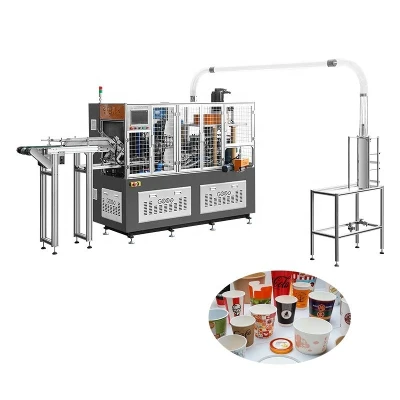
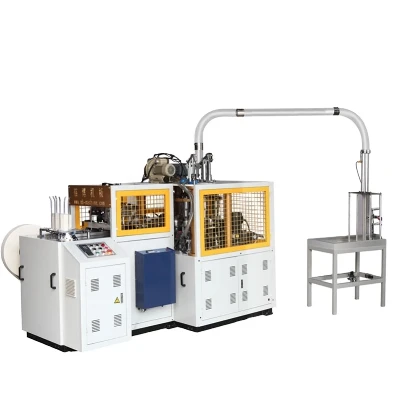
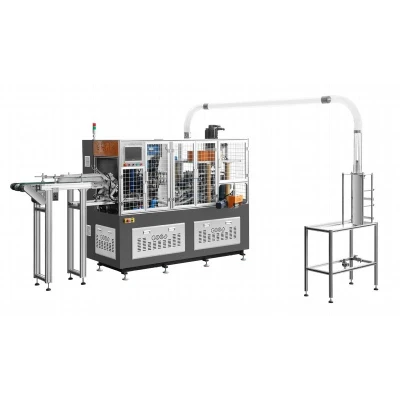
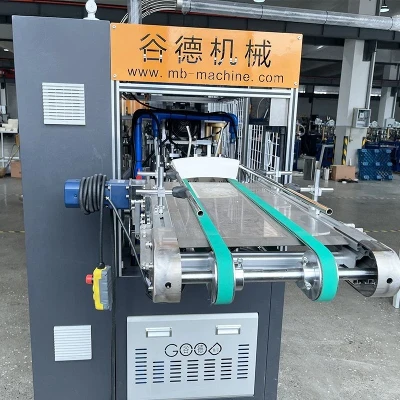

A Beginner’s Guide To How Paper Coffee Cup Making Machines Operate
Nov 01, 2025
Leave a message
The core technology of paper coffee cup machine (mainstream automatic machine) is "safety preload + parameter preload + process monitoring + cleaning maintenance." New users can follow the five-step process of "Startup Preparation → Parameter setting → commissioning → Production → Shutdown." Detailed guidelines are as follows:
I. Core Pre-Operation Preparation (Double Safety and Material Verification)
1.Safety Check (must be completed as a matter of priority)
Equipment status: check whether the machine is stable, whether the power cord and air hose (if any pneumatic components is present) are loose or damaged, and whether the grounding system works properly to prevent leakage of electricity.
Safety Precautions: Check that the emergency stop button (red, usually protruding from the operating table) is sensitive and effective, and that the machine's protective covers (molding and cutting station) is securely closed and unblocked.
Personnel Protection: Wear work clothes and non-slip shoes. Long hair should be tied up with a work cap. 1. Glove tangles are not allowed in sports areas. Work areas should be kept clean and uncluttered. Preparation of materials and tools
Core Material: Prepare suitable coated paper (kraft paper/white cardboard outer layer + polyethylene coated paper inner layer). paper thickness, such as 180-220g/m2, according to cup shape). Check that the roller is wrinkle-free and non-damaged. If you need to print, make sure the print faces in the correct direction (usually the outer layer).
Auxiliary Tools: prepare wrenches (for mold adjustment), thermometers (for heat sealing temperature calibration), cleaning cloth, compressed air gun (for waste removal) and a finished product collection box (must be pre-sterilized to prevent cups from being contaminated).
3.Equipment Cleaning (to prevent residue from affecting quality):
Use a compressed air gun to blow away dust and confetti from paper feed mechanism, cutting tables and moulds.
Wipe the heat seal components and conveyor belt surface with a clean cloth to ensure there is no residual PE coating or paper scraps to prevent heat seal from being affected.
Check that waste collection bins are empty to prevent waste accumulation and material clogging. Core Operating Process (Five Steps Quick Start)
1. Step 1: Material Installation debugging.
Web Installation: secure coated paper reels to the paper feeder and ensure that the center of the reel is aligned with the feeder so that the paper passes through the feeder reel smoothly. Set the tension controller to "initial position" (usually rotating 1-2 circles clockwise to avoid overtension or loosening).
1. Mold Inspection: According to the specifications of the coffee cups produced (e.g. 12oz, 16oz), make sure that the cup mould and cup stamping mould are installed correctly and that the mold gaps is uniform (check with a tentacle ruler and the clearance is usually 0.1-0.3mm) without loosening. Step 2: Parameter Preset (Precise Settings by Cup Type)
Open the machine and go to the "Parameter Settings" interface on the control panel (mostly a touchscreen). Set the following core parameters (reference values, adjustable by paper and cup type):
Parameter Category
Reference setting
Setting Logic
Feed speed: 30-50m/min (low speed recommended for beginners). Faster speeds lead to paper steering; slower speeds are easier to control.
Heat seal temperature: 140-180°C (melting point PE membrane). Too low a temperature will lead to poor adhesion (leakage), too high a temperature will lead to paper carbonization.
Heat seal pressure: 0.6-0.8 MPa. The pressure must match the thickness of the paper; for thicker paper, the pressure must be increased.
Cup Height/Diameter: Enter design specification (e.g. 12oz cup is 150 mm). This directly determines the size of the cut and must match the mold.
Quantity of finished products: 50-100 pieces / piece. This facilitates subsequent collection and prevents stacking.
After setting, save the parameter (suggest a cup-shaped name, such as "12oz"). (Straight ahead) Next time.
3. Step 3: Trial Run (Small Batch Test)
Blank: Press "Manual" mode to start 3-5 minutes. Observe the steady movement of feed rollers, cutter blade, and molds, and observe any abnormal noise (such as metal friction).
Small Batch Trial Production: Switch to "jog" mode and manually trigger feed. Feed 5-10 sheets of coated paper and pay attention to the following:
Cutting: Ensure exact thickness of cup body and base (measured by tape measure measure, tolerance ≤ 1mm).
Shape: Make sure the cup is curly, wrinkle-free and neatly sewn.
Heat Sealing: Ensure that there are no bubbles or leaks in the body seams and in the bonding area between the seat and the seat (a small amount of water can be poured for sealing tests).
If any problems arise, perform the following minor adjustments:
Dimensional deviation: Adjust cutter position or feed speed.
Poor sealing: Increase the heat sealing temperature (+5°C per trip) or pressure (+0.05MPa per trip) appropriately.
Paper bias: fine tuning the collimation or tension controller 4. Step 4: Formal production (full process monitoring of key points)
After confirming that the test production has passed, switch to automatic mode and press the "Start" button to start continuous production.
Real-time monitoring (every 10-15 minutes):
Raw status: Observe remaining paper roll. If insufficient, close and replace the paper immediately to avoid breakage.
Product quality: Randomly sample inspection of the finished cup for flat rims (no burrs), cup body damage, leakage.
Equipment status: ensure stable heat seal (calibrated with thermometer, error ≤ 5°C), conveyor belt is free material jams, waste collection bins is cleared in time.
5. In case of emergency (such as traffic jam, abnormal noise, leakage of electricity, etc.), press the "Emergency Stop" button immediately to disconnect the power cord and troubleshoot. Don't open it. Step 5: Close and complete (ensure Equipment Lifespan)
Normal shutdown: press the stop button after completing a production task. Wait for the machine to empty the rest of the paper and finished products. If so, turn off power and compressed air.
Waste and Finished Product Disposal: Waste (chips) collected by sorting (recyclables). Place finished cup in a sterilized collection box and indicate the batch and time of production.
Equipment Cleaning: use compressed air gun to remove paper feed mechanism, mold and cutting table residual confetti. Wipe the heat seal assembly with a clean cloth soaked in neutral detergent (such as a diluted dish soap solution) to remove any remaining PE film.
Recording and inspection: Fill in production log form (including production volume, qualified product number and equipment failures). Check that all equipment components are in undamaged condition and retain them for reference. III. Common Problems and Solutions for New Users
Problem Symptom Common Cause Solution
Paper feed force is uneven, guide roller eccentricity fine tuning tension controller, with wrench calibration guide roller position
Low seal temperature and insufficient pressure to increase heat seal temperature (+5°C once) and pressure
Inconsistency between cup holder and cup body, short positioning calibration time for assembly station, more retention time time + 0.5 seconds seconds)
Edge abrasion and tear, cutting too fast to Replace cutter blade, reducing paper feed speed
Equipment due to alarm shutdown, paper sealing temperature anomaly, check temperature control system, reset alarm.
IV. INTRODUCTION 1. Main points of daily maintenance (prolonging the service life of equipment).
Daily maintenance: cleaning equipment surfaces and key workstations, checking emergency stop buttons and covers are working properly, lubricating paper feed roller bearings with food-grade lubricant (weeks);
Weekly maintenance: check whether the heat seal component is deformed, calibrate temperature sensor, tighten die screw to prevent loosening;
Monthly maintenance: replace conveyor belt (if worn), clean cutter blade (keep sharp after polishing);
Replace Consumable Parts: Switch cutters and heat seal every 3-6 months (depending on frequency of use) to avoid affecting product quality.
V. Introductory guide to avoiding traps
Don't skip the "trial run" and go straight to mass production. Small-batch testing can detect parameter deviation early and reduce waste generation.
Do not blindly raise the heat seal temperature. More than 200 degrees Celsius tends to carbonize PE coatings, affecting sealability.
Always press the emergency stop button when clearing material blockage. Do not reach directly into the die or cropping table (special tools may be used to assist).
Different thickness of Coated paper requires readjustment of parameters; do not simply use the old parameters (thick paper requires higher temperature and pressure). Through the above process, beginners can master basic operating methods in 1-2 hours. The key is to do ``soil duty, soil duty, soil duty." Familiar with it, can optimize parameters and improve efficiency according to production needs.
Send Inquiry