




How Paper Coffee Cup Making Machines Work Step By Step
Oct 01, 2025
Leave a message
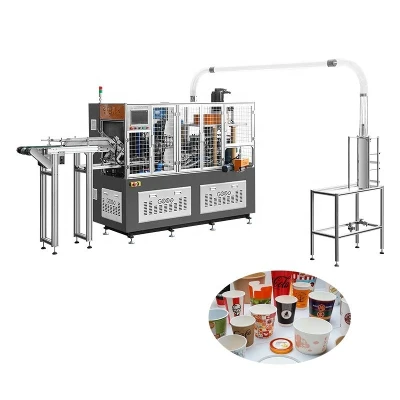
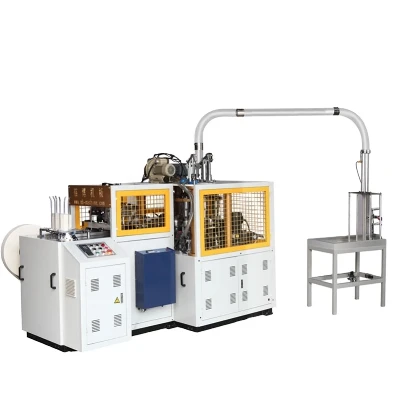
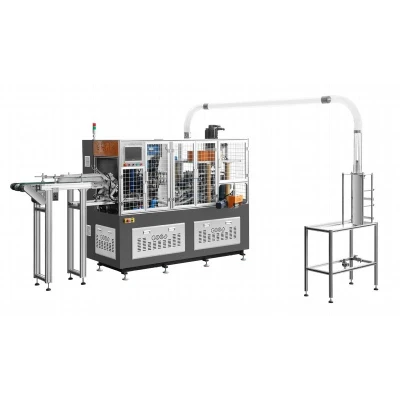
Paper coffee cup machine works by automatically processing rolls or pieces of paper into cup and bottom. They are then assembled, sealed and molded to produce a paper coffee cup suitable for storing beverages. The core process is "Component Processing + Precision Assembly," which can be divided into five key steps:
1.Core structure: three key systems to Supporting the process
Before understanding the principle, it is important to understand the core components of the machine, which directly determine the processing performance of each step:
paper feeding System: This system is responsible for the delivery of raw paper (typically coated paper consists of the outer layer of brown paper and the inner layer of PE to leak prevention). It works in two modes: "rolling" (continuous feeding for efficiency) and "single feeding" (small batches fed in single feed). The tension controller ensures that the paper is smooth, non-deflective feeding.
Molding system: The core processing unit includes cup molding mould and cup base stamping mould. It uses heating, pressurizing and curling to shape the paper into the cup and bottom. The assembly and sealing system is responsible for connecting the cup to the base, using either thermal pressure (melted using PE laminate and then glued together) or ultrasonic welding to ensure a leak-free joint and finalize cup rim (making it smooth and burr free).
ii. Complete Workflow: 5-Step Automated Processing
Take the mainstream "roll-fed fully automatic paper coffee cup machine," for example. The process is seamless and requires no manual intervention. The specific steps are as follows:
1. Raw Paper Pretreatment and Transport
coated paper is mounted on the paper feeder. Guide rollers and tension controller carry the paper to the next step at a constant rate.
Some machines preprocess paper for printing (e.g., brand logos or designs). If you don't need to print, the paper goes straight to the forming stage.
1. Paper is cut through the "paper cutting mechanism" to form a fixed size of "cup rough" (fan or rectangle, depending on the shape of the cup) and "cup rough" (round) to ensure the uniform size of each 2. Cup Body Forming: from flat paper to Three-Dimensional Cup Body
Curl molding: the cup body rough into the ``cup body molding mold ''. The robotic arm or roller bends the rough material into a cylindrical shape (the original cup shape) while heating the inside of the mold (about 120-180°C, consistent with the melting point of the PE coating).
Seam Heat Sealing: Overlapping seams of curly cylindrical rough are pressurized and heated through hot rolling tubes, melting and bonding the inner PE coating to form a sealed cup (seamless leakage).
Cup Cutting: Sealed long cylinders are cut into individual cups (up to the desired height) using a "cutter." The rims is also initially trimmed to remove burrs. Cup Base Forming: stamping + molding.
The blank of the cup base is transmitted to the cup base stamping die. The die uses high-pressure stamping (approximately 5-10 MPa) to press flat paper into the bottom of a cup with a raised edge (the raised edge is used to connect the cup).
The stamping cup base is thermoset to solidify the PE coating to ensure a stable shape and resisting deformation. Cup Body and Base Assembly: Sealed and leakproof
Positioning and docking: The robotic arm turns the cup upside down on the "assembly station." From below, the bottom of the cup is aligned precisely with the bottom opening of the cup to ensure that the grooves in the inside of the cup are fully embedded in the raised edges of the cup.
Thermal seal: The heating ring inside the assembly station (set to the same temperature as the hot seal seam in the cup) applies pressure and heat to the contact point between the cup and base, melting the PE coating between the cup and the base and gluing them together to form a "base-body integrated" structure that completely eliminates leakage.
Some high-end models use "ultrasonic welding" instead of heat pressure. High-frequency vibrations generate frictional heat and melt the PE coating at the point of contact, creating a more effective seal without the risk of high temperature burns. Cup Rim Forming and finished deliveries
Cup Edge Trim: Assembled coffee cups are transported to the "cup rim forming mechanism," where a rotating blade or hot press ring prunes the rim edge to a smooth surface. The rims can also curl inward or outward (to prevent lip scratches and improve the user experience).
Quality Inspection: some equipment is equipped with visual inspection system, can automatically check whether the cup body is damaged, the seams are tight, the bottom of the cup is aligned. Defective products are automatically rejected.
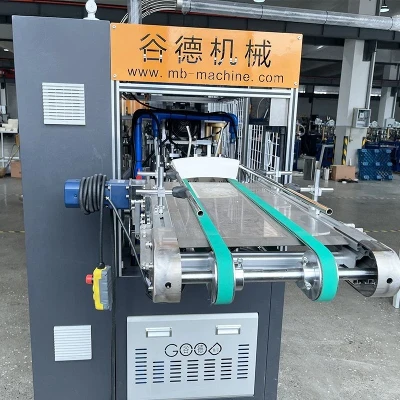
Finished collection: Qualified coffee cups transported via conveyor belt to product boxes, where they are stacked neatly for further packaging (such as dust film applications and crates).
III. Key technology: ensure leak-free, deformed cups
Temperature control: Thermal seal temperature must match the melting point of PE film accurately. (Too low results lead to poor adhesion and leakage; too high can lead to carbonization of paper, affecting appearance) Mainframe adopts PLC control system to adjust temperature in real time and maintain temperature of + -5 ℃. Pressure Adjustment: The pressure in the punch holder and thermoseal needs to be adjusted to the thickness of the paper (thicker paper requires higher pressure) to ensure complete molding and tight seal, while avoiding damage to the paper due to excessive pressure.
Mold Compatibility: By replacing cup and base molds of different sizes, coffee cups cups of different volumes (e.g., 12oz 16oz) and shapes (e.g. straight cup, waist cup) can be produced to meet diverse needs.
Send Inquiry